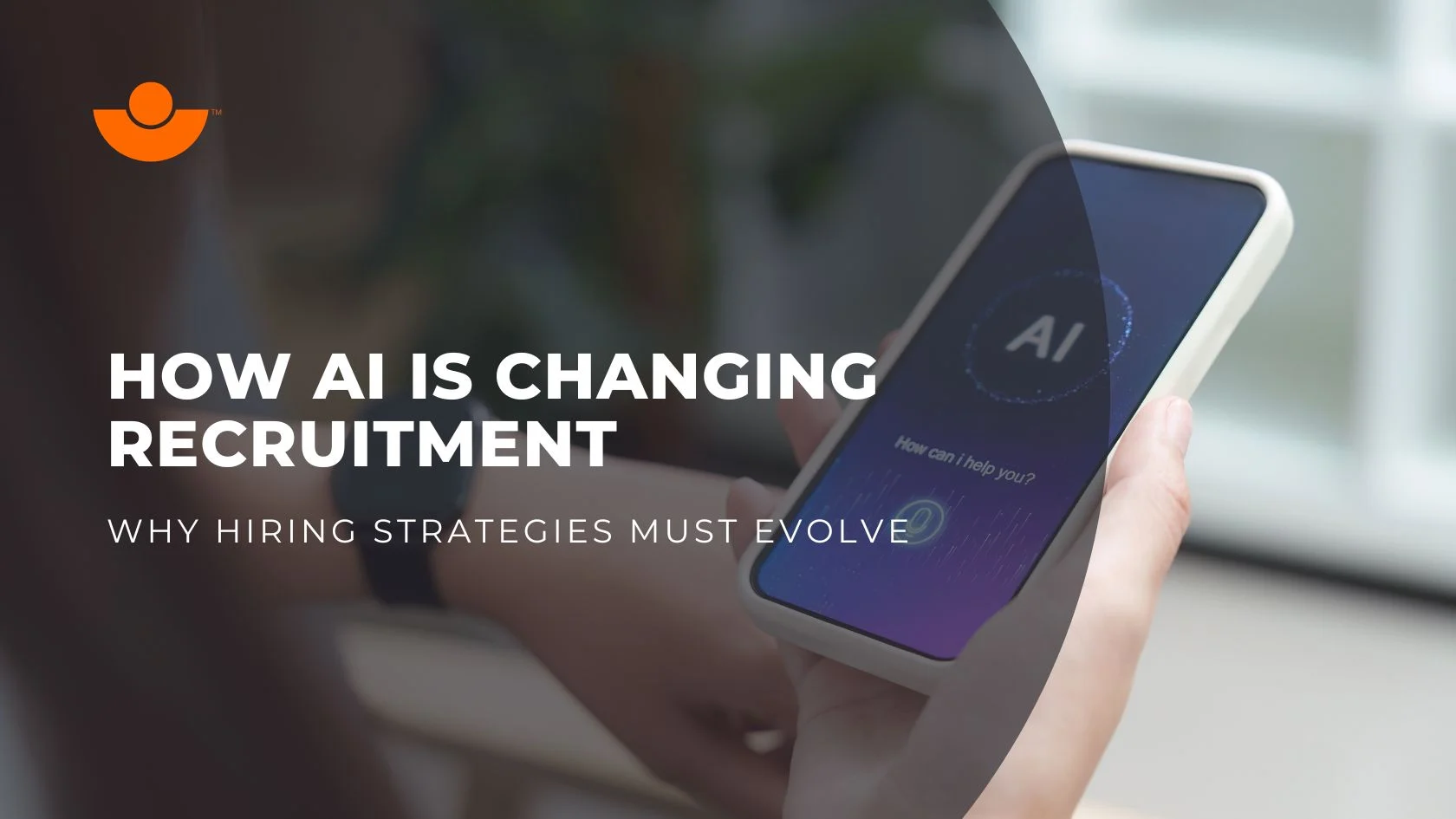
Artificial intelligence is transforming the recruitment landscape, but as businesses race to adopt new technologies, finding the right talent is becoming increasingly complex.
From AI-generated resumes to evolving technical skill requirements, employers are facing new challenges when it comes to identifying, assessing and attracting the people who can drive meaningful business transformation.
For organizations investing in AI, the question is no longer simply who has the right experience? It's who has the skills, adaptability and mindset to succeed as technology continues to evolve?
Gary Hanley, Senior Vice President of US Talent Strategy and Recruiting at MCS Group, recently joined Bob Pulver on the Elevate Your AIQ podcast to discuss the changing recruitment landscape, the growing demand for AI-ready talent and why businesses need to rethink their hiring strategies.
Drawing on his experience across technology, international business expansion, talent strategy and his graduate-level teaching at Northeastern University, Gary shared his perspective on what employers should prioritize when building a workforce for the future.
How Is AI Changing Recruitment?
AI is reshaping how businesses approach talent acquisition. Tasks such as candidate sourcing and scheduling can increasingly be supported by automation, allowing recruitment professionals to focus on more strategic activities. However, the impact of AI recruitment extends far beyond efficiency.
As organizations integrate AI into their operations, the skills they need are changing. Roles are evolving, job descriptions are becoming less standardized and businesses are having to consider what their workforce will look like in the years ahead.
For Gary, this represents a significant shift in the role of recruitment partners. Rather than simply responding to vacancies, recruitment agencies must increasingly understand the underlying business challenges driving hiring decisions.
This means supporting employers with areas such as:
- Talent market mapping: Understanding where specialist skills are available and how competitive those markets are.
- Workforce planning: Identifying the capabilities businesses need today and in the future.
- Compensation benchmarking: Helping employers develop competitive salary strategies.
- Role design: Defining responsibilities and skills requirements as technology transforms existing positions.
- Global talent strategy: Identifying opportunities to access specialist talent across different locations.
The result is a more consultative approach to recruitment, where hiring decisions are closely connected to long-term business objectives.
Why AI-Ready Talent Is About More Than Technical Skills
With demand for AI capabilities growing across industries, employers are understandably focused on finding professionals with relevant technical expertise. However, AI readiness is not simply about knowing how to use a particular platform or tool.
Gary highlighted the importance of looking beyond technical proficiency to identify candidates with transferable skills that will remain valuable as technology changes. These include critical thinking, curiosity, problem-solving, adaptability and a commitment to continuous learning. This is particularly important when businesses are recruiting for positions that may look very different in 18 to 24 months.
As Gary asked during the podcast:
"How do you hire for roles that you're not sure if that role will be there in 18 to 24 months?"
Hiring exclusively for today's technical requirements risks overlooking individuals who could deliver significant long-term value. Instead, employers should consider whether candidates can adapt as their responsibilities evolve, learn new technologies and contribute to an organization's wider transformation.
Gary also highlighted the value of non-linear career paths. Professionals who have worked across different industries or functions can bring transferable knowledge, fresh perspectives and valuable problem-solving capabilities. For employers, this reinforces the importance of assessing potential alongside experience.
The Challenge of AI-Generated Resumes
One of the most significant challenges emerging in AI recruitment is the increasing use of generative AI in job applications.
Candidates can now produce highly tailored resumes that closely match individual job descriptions, often making it difficult for employers to distinguish genuine experience from AI-enhanced presentation.
While AI can help candidates communicate their skills more effectively, it can also make traditional resume screening less reliable. Gary explained that employers are responding by placing greater emphasis on other stages of the recruitment process, particularly interviews and practical assessments. Rather than relying solely on what candidates claim to know, organizations are increasingly looking for evidence of how they apply their knowledge.
For example, employers can explore:
- How has a candidate used AI to solve a real business problem?
- What measurable outcomes resulted from their work?
- How do they evaluate the accuracy and reliability of AI-generated outputs?
- When have they challenged or adjusted an AI recommendation?
- Can they demonstrate independent critical thinking alongside AI-assisted work?
These questions help employers assess whether candidates are using AI to enhance their capabilities rather than replace their own judgment.
Gary also highlighted the growing challenge of inconsistent job titles and skill requirements across organizations:
"You can use a term like AI engineer, and it could mean three different things in three different organizations."
This makes clearly defined hiring criteria and meaningful candidate assessments particularly important. A candidate with 18 months of relevant, hands-on AI experience may offer greater value than someone with three years of less applicable exposure. The quality and business impact of that experience matter more than the number of years listed on a resume.
Responsible AI in Recruitment: Why Governance and Transparency Matter
As AI becomes more embedded in recruitment, employers must consider how technology is used and how candidate information is handled.
During the podcast, Gary highlighted the importance of data governance when evaluating AI-enabled recruitment platforms, particularly how candidate data is processed, stored and used to generate recommendations.
Gary also highlighted the growing complexity of international recruitment, referencing the EU AI Act as an example of evolving AI regulation. While the legislation is European, it can also affect US businesses operating internationally.
In the US, existing federal employment laws, including Title VII of the Civil Rights Act, apply to AI-assisted hiring. New York City's Local Law 144 goes further, introducing bias audit and transparency requirements for certain automated recruitment tools.
For employers, these developments reinforce the importance of responsible AI adoption, protecting candidate information and ensuring hiring decisions remain fair and transparent.
Why Businesses Need a Long-Term AI Talent Strategy
As AI adoption accelerates, competition for specialist talent is creating challenges for organizations looking to scale their teams.
This is particularly relevant in technology-driven sectors such as financial services, fintech, insurtech and cybersecurity, where businesses are seeking professionals capable of delivering complex, high-impact projects.
Gary emphasized that organizations should avoid treating recruitment as the only solution to their AI skills requirements. Instead, businesses making progress with AI workforce transformation are taking a broader approach that combines external recruitment with internal training, upskilling and skills development.
This may involve hiring experienced specialists to lead AI initiatives, developing existing employees' capabilities and introducing early-career professionals who can grow alongside the business.
There is no universal approach to building an AI-ready workforce. The right strategy depends on an organization's existing capabilities, business objectives and stage of development.
Looking Beyond Traditional Talent Hubs
Location strategy is another important consideration.
Businesses that concentrate their AI hiring in highly competitive markets such as Silicon Valley, New York or Boston may find themselves competing against major technology organizations with significantly greater recruitment resources. This can create challenges around salary expectations, employee retention and access to specialist skills.
Gary highlighted the value of a geographically diversified recruitment strategy, particularly for growing businesses building engineering and technology teams.
By exploring talent markets beyond established technology hubs, organizations can potentially access new skills pools while reducing their exposure to competition in any single location. For businesses expanding internationally or building globally distributed engineering teams, understanding regional talent availability and compensation expectations can be critical to sustainable growth.
Why Early-Career Hiring Still Matters in the Age of AI
As automation takes on more routine responsibilities, some organizations are reconsidering their approach to graduate and entry-level recruitment. However, reducing early-career hiring could create significant challenges for future workforce development.
During the podcast, Gary shared encouraging feedback from employers who have seen early-career professionals quickly embrace AI tools, bringing fresh perspectives and an openness to new ways of working.
When this willingness to learn is combined with the experience and judgment of more senior colleagues, organizations can create valuable opportunities for innovation and knowledge sharing. At the same time, early-career employees need opportunities to develop the practical experience, business understanding and decision-making skills required to progress. Removing these opportunities risks weakening the future pipeline of experienced professionals.
Gary emphasized that organizations need to continue developing early-career talent, even as technology changes the nature of traditional entry-level responsibilities.
For employers, the challenge is not whether to continue investing in early-career talent, but how to redesign these opportunities for an AI-enabled workplace. A sustainable recruitment strategy must balance immediate skills requirements with the development of future talent.
Building Trust in an AI-Driven Hiring Process
As AI becomes more embedded in recruitment, trust and transparency are increasingly important.
Candidates want to understand how employers use technology throughout the hiring process, while organizations need confidence that applicants can use AI responsibly and effectively. Gary emphasized that trust is not established through a single interaction.
"Trust comes from repeated engagements."
Instead, it develops through consistent engagement, transparent communication and meaningful relationships over time. This is why talent communities and long-term candidate engagement remain valuable parts of an effective recruitment strategy. Industry events, professional networks and ongoing conversations allow employers to connect with skilled professionals before an immediate vacancy arises. For businesses entering new markets or building specialist technology teams, these relationships can help create sustainable talent pipelines.
Gary also highlighted the importance of communicating an organization's wider strategy to prospective employees.
Candidates are not simply evaluating a job description or salary package. They are considering where a business is heading, how their role might evolve and whether the opportunity aligns with their long-term career ambitions. Employers that communicate their transformation journey clearly are better positioned to engage candidates who share their vision.
The Future of Recruitment: From Filling Roles to Solving Business Challenges
As AI continues to automate transactional recruitment activities, the value of human expertise is becoming increasingly important. Gary believes the future of recruitment will place greater emphasis on business understanding, strategic advisory capabilities and the ability to interpret talent market data.
Recruiters will need to understand not only which skills are available, but also how those skills support an organization's wider objectives. This includes helping businesses identify the root cause of hiring challenges, evaluate workforce requirements and make informed decisions about where and how to recruit.
Data literacy will also play a growing role. The ability to analyze talent markets, interpret hiring trends and communicate meaningful insights will become increasingly valuable as recruitment evolves.
However, the fundamental importance of human relationships remains unchanged. Strong recruitment partnerships depend on understanding people, building trust and connecting candidates with opportunities where they can succeed. AI can support these activities, but it cannot replace the value of meaningful conversations and informed human judgment.
Building an AI-Ready Workforce Starts with a Conversation
As Gary highlighted during his conversation with Bob Pulver, while technology continues to transform the recruitment industry, the importance of human connection remains unchanged.
"All good things start with conversations."
At MCS Group, we believe successful recruitment is about more than filling vacancies. It's about understanding your business, identifying the skills you need and building a talent strategy that supports long-term growth.
Whether you're looking to hire AI-ready talent, build specialist technology teams or explore new talent markets, our recruitment specialists are here to help.
Ready to build your future workforce?
Get in touch with MCS Group to discuss your hiring challenges and discover how we can support your talent strategy.
To hear more from Gary Hanley, listen to his conversation with Bob Pulver on Elevate Your AIQ: Maturing Recruitment and Recognizing AI-Ready Talent.