

In Greater Boston’s thriving tech and financial hubs, from the Financial District down to Cambridge’s innovation corridors, companies are building software that touches trillions of dollars. Whether it’s real-time payment rails, automated insurance underwriting platforms, or institutional banking infrastructure, these are no-fail environments.
In these settings, a single oversight isn't just a bug; it is a regulatory breach, a potential multi-million-dollar compliance failure, and a fatal blow to customer trust.
As digital transformation accelerates and cyber threats evolve, local employers are shifting how they evaluate talent. They are learning a critical lesson: technical brilliance alone is no longer enough. To truly safeguard sensitive data, New England employers must look for professionals who bring cross-sector experience in strict, compliant, and zero-trust environments like banking, payments, and InsurTech.
What Defines a "No-Fail" Tech Environment?
A no-fail environment in a regulated industry is any digital ecosystem where downtime, data leaks, or transaction errors carry immediate legal, financial, or systemic consequences. Examples include;
- Fintech: Where microsecond execution must coexist with strict anti-money laundering (AML) and know-your-customer (KYC) regulations.
- InsurTech: Where legacy data systems must securely process petabytes of sensitive personal and corporate risk metrics under strict state-level insurance guidelines.
- HealthTech & BioTech (A New England Staple): Where patient data privacy (HIPAA) merges with financial-grade security models.
Why Cross-Sector Compliance Experience Transfers and Matters
When scaling engineering, product, and data teams in Boston, hiring managers often default to looking for candidates from the exact same industry vertical. However, the most resilient tech teams are built by cross-pollinating talent from adjacent regulated sectors. Here is why experience in payments and banking transfers seamlessly, and why it matters more than ever:
1. The Mindset of "Assume Breach" (Zero-Trust Architecture)
Engineers coming from traditional SaaS backgrounds are often optimized for speed, rapid deployment, and growth hacking. Conversely, professionals with banking and payment tech backgrounds operate intrinsically under a zero-trust framework. They design code, data pipelines, and infrastructure assuming that the perimeter has already been compromised. This defensive programming mindset is invaluable as companies handle increasingly sensitive consumer and enterprise data.
2. Regulatory Fluency Reduces Time-to-Market
Engineers and product managers who have built products inside heavily regulated financial institutions already speak the language of compliance officers and auditors. They anticipate regulatory roadmaps during the architecture phase rather than scrambling to patch security holes post-launch. For Boston-based startups looking to scale rapidly without tripping over compliance wires, this prior exposure saves months of costly developmental delays.
3. Rigorous Data Governance Under Pressure
Handling sensitive financial records or proprietary insurance data requires rigorous lineage tracking, encryption protocols, and immutability. Talent forged in banking and InsurTech treat data hygiene as a reflex. They understand data governance not as a compliance checkbox, but as the bedrock of system architecture.
How to Source Compliance Talent: A Practical Hiring Playbook
Sourcing professionals who excel in zero-trust environments requires moving away from passive job postings and implementing a targeted recruitment strategy:
Look Outside the Vertical Box: Expand your sourcing parameters beyond direct competitors. Target talent pools in legacy financial institutions, payment gateways, and heavily audited enterprise tech firms that are looking to pivot into fast-growing tech ecosystems.
Test for Defensive Architecture Mindsets: During technical screens, shift focus away from purely feature-velocity questions. Ask candidates how they handle failure domains, state recovery under unexpected latency, and how they isolate data boundaries.
Assess Risk-Aware Collaboration: In no-fail environments, engineers must collaborate closely with legal, risk, and compliance teams. Evaluate a candidate's ability to translate complex technical constraints into plain language for non-technical stakeholders.
Navigating the New England Compliance Talent Pool
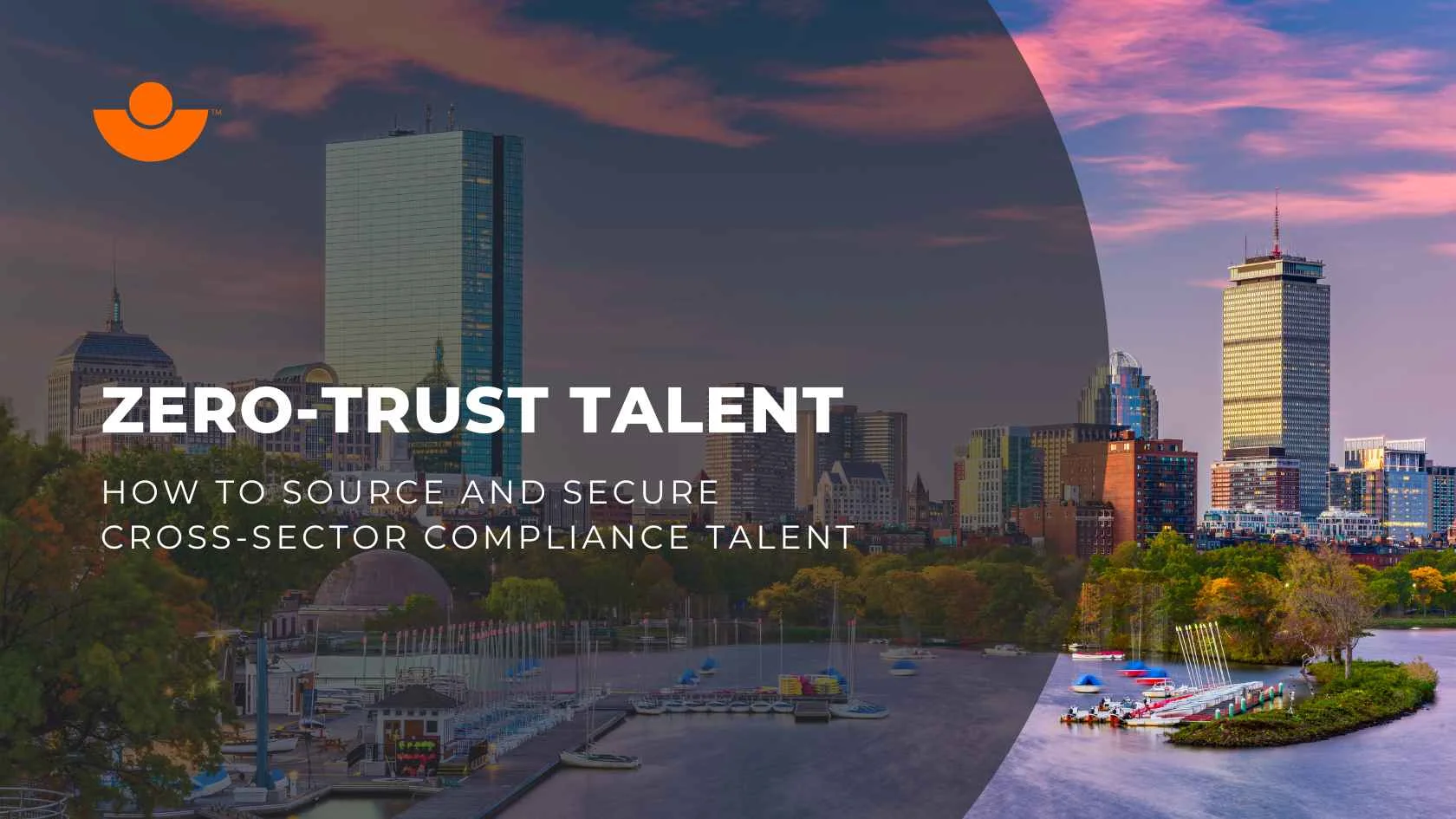
Boston and the broader New England region sit at a unique crossroads of world-class universities, legacy financial institutions, and hyper-growth tech disruptors. Because the talent pool for high-compliance engineering and product leadership is intensely competitive, securing top-tier professionals requires a specialized recruitment strategy.
Generic job boards and broad-brush tech staffing will not cut it when you need someone who understands both cloud-native development and strict regulatory scrutiny. You need recruitment partners who understand the local New England landscape, the nuances of regional compliance, and the exact behavioral and technical markers of "no-fail" talent.
Secure Your Ecosystem with Specialized Talent
Are you scaling a FinTech, InsurTech, or high-security tech enterprise in Boston or across New England? Finding professionals who can navigate complex regulatory landscapes while driving rapid innovation requires deep market expertise.
At MCS Group, we specialize in connecting ambitious companies with elite technology, product, and compliance talent.
Upload your vacancy today or get in touch with our Boston recruitment specialists to build a resilient team built for no-fail execution.